No drafting legal instruments
When this boundary is reached, the specialist pauses, preserves the source context, and routes the item to the named owner.
 Closing SpecialistPowered by StealthAgents
Specialist closing support
Organize approved closing records and stakeholder requests. The role works inside approved systems and hands every decision back to an accountable owner.
Discuss this support lane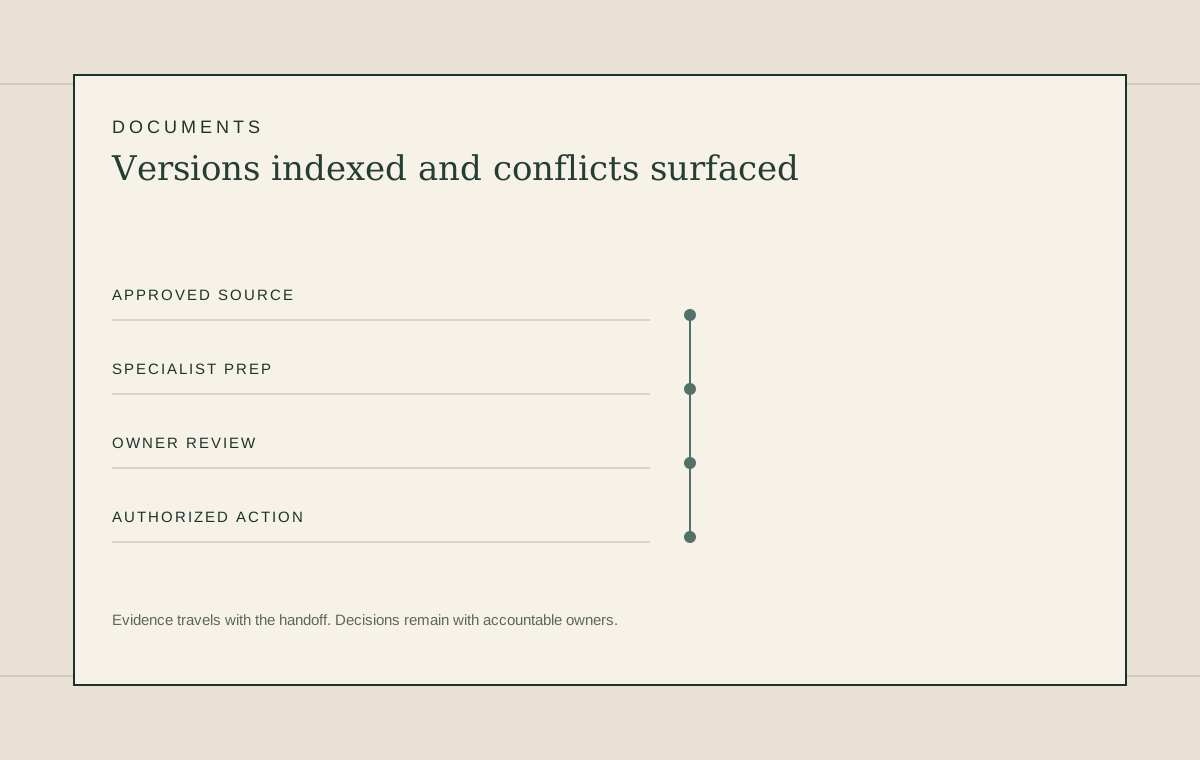
Who this is for
Reviewers lose time when records arrive through several channels without a clear current version or source trail.
What enters the lane
What comes back
Working method
Use the named system and current version. Record missing context before work begins.
Complete the documented task, retain source links, and avoid filling gaps through assumption.
Compare the output with the owner-approved checklist and flag every exception.
Route the record, evidence, and open questions to the accountable owner.
Common starting scenarios
Define the current source, expected status, owner checkpoint, and escalation trigger before assigning volume.
Define the current source, expected status, owner checkpoint, and escalation trigger before assigning volume.
Define the current source, expected status, owner checkpoint, and escalation trigger before assigning volume.
Quality control
Sample completed records against source accuracy, required fields, version clarity, exception handling, and owner acceptance. Update the workflow when the same defect or exception repeats.
Expand after the first bounded sample passes review and common exceptions have documented owners.
Only through approved channels, templates, permissions, and escalation rules defined by your organization.
Your qualified and authorized personnel retain final review and every professional, legal, financial, or closing decision.
Bring one real workflow without client, identity, property, or financial data.
Plan a consultation